Our Prayer

Our Prayer

Heavenly Father, I know that I have sinned against You and that my sins separate me from You. I am truly sorry. I now want to turn away from my sinful past and turn to You for forgiveness. Please forgive me, and help me avoid sinning again. I believe that Your Son, Jesus Christ, died for my sins, that He was raised from the dead, is alive, and hears my prayer. I invite Jesus to become my Savior and the Lord of my life, to rule and reign in my heart from this day forward. Please send Your Holy Spirit to help me obey You and to convict me when I sin. I pledge to grow in grace and knowledge of You. My greatest purpose in life is to follow Your example and do Your will for the rest of my life. In Jesus' name I pray, Amen.

Thursday, January 5, 2017

Class Lesson January 8, 2017


THE BIBLE MEETS LIFE 

You know how long an inch is, right? You can probably hold out your finger and thumb and say, “An inch is about this big.” You might even be close. 

Interestingly, the length of an inch used to be determined by the “rule of thumb.” Meaning, an inch was measured as the width of your thumb. But when one carpenter’s thumb happened to be chubbier than another, it created problems. Whose thumb should be the standard? 

Today, the international standard for an inch is exactly 25.4 millimeters long. Then again, that is .0000017 of an inch longer than the imperial inch, what is used in British countries. And it’s .000002 of an inch shorter than the U.S. inch. So, the standard for the inch is still not perfectly precise. 

When it comes to the important matters of life, we need a standard that is absolutely perfect and completely reliable. Psalm 119 shows us that such a standard exists in God’s Word.


WHAT DOES THE BIBLE SAY?


Psalm 119:153-155 


153 Consider my affliction and rescue me, for I have not forgotten Your instruction. 154 Defend my cause and redeem me; give me life as You promised. 155 Salvation is far from the wicked because they do not seek Your statutes. 

As he neared the end of his epic psalm, the psalmist made two requests of God: 

“Consider my affliction.” The palmist wasn’t simply asking God to notice what he was going through. He was asking God to look on his situation with compassion and then move to do something about it. We know this is true because of his second request. 

“Rescue me.” Only God could change the psalmist’s situation. The psalmist trusted the promises given by God in His Word; therefore, he trusted God to rescue him. 

The psalmist knew God was the only One who could keep him secure, so he prayed, “Defend my cause and redeem me.” He spoke as if he were in a court of law, accused of wrongdoing, and in need of a defense attorney to plead his case. He called on the Lord, even as another psalmist had done: “Vindicate me, God, and defend my cause against an ungodly nation; rescue me from the deceitful and unjust man” (Ps. 43:1). 

The God who pleads our case is the same God who redeems us. This is the hope we have in the Lord Jesus Christ. Also using imagery from a courtroom, the apostle John wrote, “But if anyone does sin, we have an advocate with the Father—Jesus Christ the Righteous One” (1 John 2:1). Jesus our Advocate is also the One who made it possible for us to have free access to the divine throne. We see this truth in Hebrews: “Therefore let us approach the throne of grace with boldness, so that we may receive mercy and find grace to help us at the proper time” (Heb. 4:16).


Verse 155 teaches us two things about the nature of salvation: 

1. Salvation is far from the wicked. We cannot experience God’s salvation as long as we hold on to our sin and wickedness. 

2. Salvation is found in God’s Word. The psalmist gave a specific reason why salvation is far from the wicked: “because they do not seek Your statutes.” The truth is that God doesn’t save us against our will; people will not be in heaven that do not want to be there. Scripture points us to Jesus Christ—the ultimate Word—and how we have life and salvation in Him. If we fail to heed that Word, we are left in our wickedness.


Psalm 119:156-159 

156 Your compassions are many, Lord; give me life according to Your judgments. 157 My persecutors and foes are many. I have not turned from Your decrees. 158 I have seen the disloyal and feel disgust because they do not keep Your word. 159 Consider how I love Your precepts; Lord, give me life according to Your faithful love. 

The Bible not only points us to salvation in Christ, but also tells us why He offers us salvation. “Your compassions are many, Lord.” God is a God of mercy. In fact, He is rich in mercy (see Eph. 2:4)! 

God is loving and kind to us, not because we are good, but because He is good. In His good mercy, He gives us life. And in His love, He gave us His Word to restore and strengthen us. The psalmist wrote: “Give me life according to Your judgments.” The circumstances of life may knock us down, but the Word of God will put us on our feet again.


The psalmist needed the great mercy of God because he had a great many adversaries. He felt like an army of enemies had risen against him. Even so, he was determined that his enemies would not deter him from obeying the word of God: “I have not turned from Your decrees.” 

The psalmist spoke a hard word against the wicked in verse 158: “disgust.” He called them “disloyal,” for they had broken the covenant relationship with God. He was not only saddened by such betrayal, but felt contempt and revulsion because of their willful disobedience to the Word of God. 

We likewise should feel “disgust” when we see sin and disobedience in others—but never with a sense of pride. As we look upon the faithless, we must remember that it’s only by the grace of God we aren’t in the same spiritual condition.


In verse 153, the psalmist prayed that God would consider his affliction. In verse 159, he asked God to “Consider how I love Your precepts.” Love for Scripture is an expression of devotion to God. We can obey the Word of God without loving it, but we cannot love His Word without being fully committed to learning and living it. 

All of Psalm 119 celebrates the sufficiency of Scripture—for everything in life. We need the Word of God. More importantly, we need the God of the Word. The Bible is not a math book with formulas we must figure out to master life. It is a love story in which God is the Lover and we are the beloved. Only those who learn the story experience the life-transforming power of God’s Word.


Psalm 119:160 

160 The entirety of Your word is truth, and all Your righteous judgments endure forever. 

The closing verse of this stanza affirms the truthfulness of God’s Word. In order to truly rely on the Bible, however, we must actively trust it, as the psalmist did. 

  • Trust that the Word of God is true. Scripture doesn’t merely contain truth. Even a supermarket tabloid can contain some truth. The whole of Scripture—in its totality and without exception—is absolutely and perfectly true. The Bible doesn’t contain a speck of untruth. Every principle, every prophecy, every promise is true. The sum and entirety of God’s Word is true. As the apostle Paul wrote: “All Scripture is inspired by God and is profitable for teaching, for rebuking, for correcting, for training in righteousness, so that the man of God may be complete, equipped for every good work” (2 Tim. 3:16-17). 

  • Trust that the Word of God is eternal. The prophet Isaiah also affirmed psalmist’s words: “The grass withers, the flowers fade, but the word of our God remains forever” (Isa. 40:8). Scripture doesn’t have to be updated to catch up with the times; the Bible is the book of the ages. Truth doesn’t change, and the truth of God’s Word is still as relevant and powerful today as it was when it was first penned—and it will continue to be so. Consequently, we can trust God’s eternal truth to work powerfully in our lives. “For just as rain and snow fall from heaven and do not return there without saturating the earth and making it germinate and sprout, and providing seed to sow and food to eat, so My word that comes from My mouth will not return to Me empty, but it will accomplish what I please and will prosper in what I send it to do” (Isaiah 55:10-11). 

The Bible is a powerful, transformational, and miraculous message written by God Himself. Therefore, you can rely on everything it says for every moment of your life.


LIVE IT OUT


The Word of God is true. How will this truth affect your actions and attitudes this week? Consider the following suggestions: 

  • Truth to rely on. As you read God’s Word in the coming weeks, write down each truth you encounter. Build a journal of truths you can rely on each day. 

  • Truth to study. Commit to becoming a life-long student of God’s Word. This week, choose to focus on a book of the Bible that you’ve never studied before. Consider using a commentary on that book as you dig into the text. 

  • Truth to share. Consider expanding the impact of your current Bible study group (and your church) by branching out to start something new. Reach out to people in your neighborhood or to a specific demographic in your congregation, then help new members dive into God’s Word. 


Don’t be tempted to follow a “rule of thumb” for your life—a standard that changes from person to person. Instead, use the perfect standard of God’s Word to measure each moment of your life.


Teacher's Notes


Video: Rick Warren – The tide goes out, but it always comes back in. Will you trust God?

Click Here to Watch


What’s the greatest truth that ever crossed your mind?


Billy Graham writes that the great Swiss theologian, Dr. Karl Barth, was probably in his generation the greatest theologian and philosopher in the world. He didn’t always agree with him, but he was a friend and he respected him. While he was in this country, a student at one of the seminaries said, “Dr. Barth, what is the greatest truth that ever crossed your mind?” All the seminary students were sitting on the edge of their seats to hear some great, profound, deep, complicated answer. Dr. Barth slowly raised his shaggy gray head and looked at the student and said, 

“Jesus loves me, this I know, for the Bible tells me so.”


When it comes to the important matters of life, we need to be able to rely on something that we know to be true. Our lesson tells us this morning that this something is God’s Word.


Lesson Point
I can fully rely on what the Bible teaches.


A prominent theme in Psalm 119 is the profound truth that the Word of God is all-sufficient. 

Throughout Psalm 119, we have seen the psalmist go through and experience trouble, affliction, and persecution in his life. But what does he always do throughout the psalm? He turns to God’s Word for help, for comfort, for peace and for direction. Why does he do this? Because he trusts God and fully relies on what the Bible teaches.


I. God’s Word and Salvation - Psalm 119:153-155 

Consider my affliction and rescue me, for I have not forgotten Your instruction. 154 Defend my cause and redeem me; give me life as You promised. Salvation is far from the wicked because they do not seek Your statutes.


What does the psalmist pray for? What are his requests? 

  • Consider my affliction. He’s not just asking God to notice what he was going through. He was asking God to look on his situation with compassion and then do something about it. We know this is true because of his second request. Rescue me, defend my cause, redeem me, give me life. 

What do these verses teach us about the psalmist’s relationship with God?

  • He depends on God, believes God watches over him and will act on his behalf, has a talking relationship with God … communicates with Him, and he knows God’s promises.


Why would people who remain true to God’s Word suffer affliction and need rescuing?

  • “Into each life some rain must fall” - Henry Wadsworth Longfellow It’s the nature of our earthly life. The Bible says, “that you may be children of your Father in heaven. He causes His sun to rise on the evil and the good, and sends rain on the righteous and the unrighteous.” – Matt. 5:45 Look at Job: God tells us it was Satan, Job tells us it was God, his friends say it was him. Sometimes people suffer through no human fault at all. The best of God’s saints had their night. This is no indicator of divine disfavor. Life is simply hard. Sometimes people suffer because people get sick and die. 
  • God is using this affliction to make you like Christ. God’s ultimate goal for your life on Earth is not comfort but character development. He wants you to grow up spiritually and become like Christ. God wants you to develop the kind of character described in the Beatitudes, the Fruit of the Spirit, Paul’s chapter on love, and Peter’s list of the characteristics of an effective and productive life (Matthew 5:1-12; Galatians 5:22-23; 1 Corinthians 13; 2 Peter 1:5-8). 
  • Poor in Spirit, mournful, meek, hunger and thirst for righteousness, merciful, pure in heart, peacemakers, persecuted for righteousness.
  • Love, joy, peace, patience, kindness, goodness, faithfulness, gentleness, self-control.
  • A love that’s patient and kind, never jealous or envious, never boastful or proud, never haughty or selfish or rude, doesn’t demand its own way, not irritable or touchy, doesn’t hold grudges and will hardly even notice when others do it wrong, never glad about injustice, but rejoices whenever truth wins out. If you love someone, you will be loyal to them no matter what the cost. You will always believe in them, always expect the best of them, and always stand your ground in defending them. Three things remain—faith, hope, and love—and the greatest of these is love.
  • You need more than faith; you must also work hard to be good, and even that is not enough. You must learn to know God better and discover what He wants you to do. Learn to put aside your own desires so that you will become patient and godly, gladly letting God have His way with you. Then you will enjoy other people, learn to like them, and finally you will grow to love them. The more you go on in this way, the more you will grow strong spiritually and become fruitful and useful to our Lord Jesus Christ. 
  • Every time you forget that character is one of God’s purposes for your life, you will become frustrated by your circumstances. You’ll wonder, “Why is this happening to me? Why am I having such a difficult time?” One answer is that life is supposed to be difficult! It’s what enables us to grow. Earth is not Heaven, and life is not about you! You exist for God’s purposes, not vice versa. Why would God provide heaven on Earth when He’s planned the real thing for you in eternity? God gives us our time on Earth to build and strengthen our character for Heaven.

What’s the relationship between God’s Word and salvation?

  • This is where salvation is found - in God’s Word. The psalmist gave a specific reason why salvation is far from the wicked: “because they do not seek Your statutes.” The truth is that God doesn’t save us against our will; people will not be in heaven that do not want to be there. Scripture points us to Jesus Christ—the ultimate Word—and how we have life and salvation in Him. If we fail to heed that Word, we are left in our wickedness.


Here are 2 important points from these verses:

1. Deliverance is Appropriate for the Believer 119:153-154

2. Deliverance is Impossible for the Unbeliever 119:155; also John 3:16-18


“Salvation is far from the wicked, for they do not seek out your decrees.” But why is salvation always far from the wicked? Is it because they are wicked? Not at all. It is because they reject God’s Word. Their salvation is far removed because they are removed from God’s Word. The measure of one’s distance from God is determined by one’s relationship to God’s Word. To be near one is to be near the other.


Point: God’s Word is a Saving Word. 

God knows about the things that are troubling us and He will act on our behalf to set us free. God promises to be an advocate, deliverer, and life-giver to those who are faithful to Him. Salvation is God’s blessing. God’s Word points us to salvation. The spiritually destitute need to hear the message of promise and hope. Jesus is the Word become flesh, the One who came to free us from sin. 


“As much as it feels like it on some days, the world is not on our shoulders; it’s in God’s hands.”


II. God’s Word and Love - Psalm 119:156-159 

Your compassions are many, Lord; give me life according to Your judgments. My persecutors and foes are many. I have not turned from Your decrees. I have seen the disloyal and feel disgust because they do not keep Your word. Consider how I love Your precepts; Lord, give me life according to Your faithful love.


What makes it hard for people to believe God really loves them?

  • We try to put God’s love into our own human terms – love by if’s, maybe’s, and becauses. If God treated us the way we treat other people, then it would be hard to believe God loves us. If someone insults us or hurts us, we usually don’t want anything more to do with them. We may even want to strike back at them and hurt them in return. But God isn’t like this! Even when we ignore Him or insult Him by the way we live, He still reaches out to us and wants us to come back to Him. He doesn’t love our sin—but He still loves us, and He still yearns for us to love Him in return. The Bible says, “I have loved you with an everlasting love” (Jeremiah 31:3). Don’t trust your emotions; they can deceive you. Instead, trust Christ and what He has done for you. Invite Him to come into your life today, and then thank Him every morning for His unchanging love for you.
  • Distracted by busyness of life. Feel they have gone too far for God to forgive or pull them out of their troubles. Too tied up in pursuit of material things or personal success and power. Feel God disappointed them in a previous situation, mad at God.
  • God is a God of mercy. In fact, He is rich in mercy (see Eph. 2:4)! God is loving and kind to us, not because we are good, but because He is good. In His good mercy, He gives us life. And in His love, He gave us His Word to restore and strengthen us. The psalmist wrote: “Give me life according to Your faithful love.” The circumstances of life may knock us down, but the Word of God will put us on our feet again. The psalmist needed the great mercy of God because he had a great many adversaries. He felt like an army of enemies had risen against him. Even so, he was determined that his enemies would not deter him from obeying the word of God: “I have not turned from Your decrees.”


How can we uphold the truth of God’s Word, and offer friendship to those who don’t? How do you respond when unbelievers seem to “win” at life?

  • The sin we see in this world – transgressions against God – ought to bring grief to our hearts, but even more, it ought to lead us to take action against it. The psalmist spoke a hard word against the wicked in verse 158: “disgust.” He called them “disloyal,” for they had broken the covenant relationship with God. He was not only saddened by such betrayal, but felt contempt and revulsion because of their willful disobedience to the Word of God. We likewise should feel “disgust” when we see sin and disobedience in others—but never with a sense of pride. As we look upon the faithless, we must remember that it’s only by the grace of God we aren’t in the same spiritual condition. 


Point: God’s Word is a Love Story. 

It’s not a math book with formulas we must figure out to master life. The Lord is a God of compassion beyond measure. The faithful may have enemies, but they need fear none as long as they live God’s truth. God’s Word teaches about God’s love and calls for us to reciprocate with love for God and His Word. We have life eternal because God has acted in love and grace toward us – His lovingkindness is seen ultimately in Jesus.


III. God’s Word and Truth - Psalm 119:160 

The entirety of Your word is truth, and all Your righteous judgments endure forever.


What is the difference between saying God’s Word “contains truth” and that God’s Word “is truth”?

  • Trust that the Word of God is true. Scripture doesn’t merely contain truth. Even a supermarket tabloid can contain some truth. The whole of Scripture—in its totality and without exception—is absolutely and perfectly true. The Bible doesn’t contain a speck of untruth. Every principle, every prophecy, every promise is true. The sum and entirety of God’s Word is true. As the apostle Paul wrote: “All Scripture is inspired by God and is profitable for teaching, for rebuking, for correcting, for training in righteousness, so that the man of God may be complete, equipped for every good work” (2 Tim. 3:16-17). 


What are the consequences of believing that God’s Word is true?

  • You can trust it. It is a standard against which you can evaluate principles held by anyone else or any other philosophy. You know that if something is counter to what the Bible teaches, you should not believe or trust it or follow it. God’s promises can be depended on. You can be assured that what Scripture says is what God wants you to know. If it is true and eternal, then it is worthy of reading and studying. You can literally bet your life on what it says.


Point: God’s Word is a True and Enduring Word. 


This closing verse affirms the truthfulness of God’s Word. In order to truly rely on the Bible, however, we must actively trust it, as the psalmist did. How do we do that?


LIVE IT OUT

The writer of this great psalm declared his loyalty and full reliance on the Lord’s instruction. God’s Word could be trusted because it came from God. It made a difference in his life.


French Tightrope Walker Charles Blondin

The following is an old story, but it illustrates well the difference between belief and trust in Christ. In 1859, French tightrope walker Charles Blondin traveled to the Niagara Falls. He hoped to accomplish something that had never been done. He strung a one-thousand-foot cable across the falls from the Canadian side to the United States side and prepared to walk across.

A large crowd watched as Blondin successfully crossed. The next year, he made several more trips across the falls, thrilling the crowd each time with more dangerous stunts. He balanced a chair on the rope and stood on it. He took pictures of the crowd while balancing on the rope. He actually cooked a meal on a small portable cooker and lowered it to an amazed crowd on a ship below. Eventually, he got a wheelbarrow and put a weight in it and rolled it across, which impressed the crowd even more. Then he turned to the crowd and asked, “How many of you believe I could take one of you and put you in this wheelbarrow and roll you across?” Everybody said, “We believe!” But when he asked for volunteers, no one would accept his offer. Tens of thousands believed, but not one trusted.


Belief and trust are two completely different things.

Why would anyone get into the wheelbarrow? There would have to be a compelling reason. 

So, imagine there is a thick forest behind the spectators and that suddenly the forest caught fire. There was no way of escape. Now things get interesting and suddenly all the rules change. Now there are only four options for the crowd:

1. I can say, “I’m not here, and it’s not hot.” And deny your situation until you’ve burned up.

2. I can take my chances and plunge into the raging waters below.

3. I can try and go across the tightrope myself.

4. Or I can get in the wheelbarrow.

Suddenly, the offer to get in to the wheelbarrow looks very attractive. Furthermore, it’s not a leap in the dark; it’s a step into the light and perhaps your only real hope. He’s already demonstrated that he could go to the other side and come back.

And so, has Jesus. His crucifixion and resurrection was His going to the other side and coming back and this truth shows that He is who He claims to be. Trusting my life to Him, sitting in His wheelbarrow (so to speak) is really a reasonable thing to do. 


What kind of change do you think there would be in your life if you placed your trust in Jesus Christ? What’s the consequence of believing and trusting in Christ?


Hang on…the tide goes out, but it always comes back in. Trust God and be willing to Get Out of the Boat.


Let Oceans by Hillsong be your prayer today!


Click Here to Watch & Listen


"“Come,” He said. Then Peter got down out of the boat, walked on the water and came toward Jesus. But when he saw the wind, he was afraid and, beginning to sink, cried out, “Lord, save me!”" - Matthew 14:29-30


Have a great week as we begin a new series next Sunday called Thrive: Living in Real Joy! 


In His Love, 

David & Susan 


Wednesday, December 28, 2016

Class Lesson January 1, 2017


Put on your Roller Skates

and

let's Celebrate 2017!

Click Here to Watch


Do you remember Friday nights at the skating rink?


THE BIBLE MEETS LIFE 
Weight loss is consistently the top New Year’s resolution each year. What’s not consistent is how we go about achieving that goal: 
  • The 1910s emphasized chewing your food 32 times—once for each tooth. 
  • The 1930s gave us the Grapefruit (or Hollywood) diet. 
  • The 1970s started the trend of over-the-counter diet pills. 
  • The 1980s introduced exercise videos by celebrities from Jane Fonda to Richard Simmons. 
  • The 1990s gave us low carb, high protein diets. 


Who knows what’s next? Trendy diets are always based on what “experts” say is relevant. But they change as much as our waistlines. 

Our lives should be based on something far more reliable than the latest trend. Psalm 119 points to the one Source that is always consistent, and therefore, always relevant: God’s Word. 


WHAT DOES THE BIBLE SAY?


Psalm 119:89-91 


89 LORD, Your word is forever; it is firmly fixed in heaven. 90 Your faithfulness is for all generations; You established the earth, and it stands firm. 91 They stand today in accordance with Your judgments, for all things are Your servants. 

Only two things will last beyond this world: the Word of God and the souls of people. To spend eternity in heaven with God, we must commit our eternal souls to God and to the truth of His eternal Word. 

The psalmist affirmed the “forever” nature of God’s Word by proclaiming it to be “firmly fixed.” When pillars are set during a construction project, they are put there to stay. If the pillars are moved, the building will collapse. The Word of God is the pillar that upholds our lives. It is perfectly grounded and stands firm. In addition, the psalmist noted that God’s Word is “firmly fixed in heaven.” The Bible is transcendent; it’s above and beyond us. It’s outside the reach of human opposition on earth and spiritual opposition in the heavenly places. 

The Bible isn’t the book of the week, or even book of the year. It’s the book of the ages! As the prophet Isaiah declared, “The grass withers, the flowers fade, but the word of our God remains forever” (Isa. 40:8). 

The psalmist also affirmed God’s faithfulness visible in His creation: “You established the earth, and it stands firm.” God spoke our world into existence, and because it stands firm, we can trust that all God speaks will stand firm. But the heavens and the earth don’t stand on their own. God sustains them, “for all things are Your servants.” God is in control, and creation serves Him. 

This, then, is the confidence we have in Christ and His Word. He is in charge, and His Word on our behalf is timeless and faithful.


Psalm 119:92-93 

92 If Your instruction had not been my delight, I would have died in my affliction. 93 I will never forget Your precepts, for You have given me life through them. 

Continuing forward, the psalmist zoomed in on the faithfulness of God’s Word to help us in all our troubles. Having established that God’s Word is unchanging and settled (vv. 89-91), in these verses he proclaimed the Bible to be sufficient for whatever we face. 

Notice that being devoted to God’s instruction didn’t keep the psalmist from affliction. Even so, his delight in God’s Word sustained him through trouble. Note the progression and relationship between affliction and God’s Word.


  • “Before I was afflicted I went astray, but now I keep Your word” (v. 67). 
  • “It was good for me to be afflicted so that I could learn Your statutes” (v. 71). 
  • “I know, Lord, that Your judgments are just and that You have afflicted me fairly” (v. 75). 
  • “If Your instruction had not been my delight, I would have died in my affliction” (v. 92). 

The Word of God was an anchor of the soul that held the psalmist fast in the midst of a raging storm. He experienced rescuing grace because he had a proper attitude toward God’s Word. Delighting in Scripture activated its power in his life. The psalmist found joy in God’s Word—a joy that carried him through every situation. 

This delight led the psalmist to vow: “I will never forget Your precepts.” Forgetting God’s Word is a matter of the will. Consequently, remembering God’s Word requires more than just thinking about it. Remembering includes doing and persevering.


As the apostle James wrote: “The one who looks intently into the perfect law of freedom and perseveres in it, and is not a forgetful hearer but one who does good works—this person will be blessed in what he does” (Jas. 1:25). 

The psalmist’s pledge of obedience reflected sincerity, not perfection. He had determined in his heart to please God. When pleasing God is our heart’s determined desire, it will be clearly and consistently evident in how we live. 

The psalmist readily made this vow because he knew the instructions and precepts in God’s Word are life giving: “You have given me life through them.” The psalmist felt like he was at the point of death, but the Word of God revived him. This is the power of God’s Word. It can put us back on our feet again.


Psalm 119:94-96 

94 I am Yours; save me, for I have sought Your precepts. 95 The wicked hope to destroy me, but I contemplate Your decrees. 96 I have seen a limit to all perfection, but Your command is without limit. 

God will always take care of those who belong to Him. Confident of this, the psalmist prayed: “I am Yours; save me.” This specific prayer for salvation was not about forgiveness of sins; it was about deliverance from affliction. 

If you belong to God, not only will you be with Him in heaven, but God will be with you in the midst of trouble here on earth. 

The psalmist gave a specific reason why the Lord should save him: “for I have sought Your precepts.” Like us, the psalmist was not perfect. But he was able to say with honest conviction that he had attempted to build his life on the instruction of God’s Word.


We need to remember that God’s help isn’t contingent on the perfection of our lives. If that were so, we’d all be doomed! Thankfully, God is the God of grace; He gives us what we do not deserve—even as He took upon Himself the sin and death we do deserve. God saves those who seek Him. 

Even so, walking with God doesn’t mean we’ll be immune from trouble. The psalmist certainly knew and experienced this: “The wicked hope to destroy me, but I contemplate Your decrees.” We will face opposition. But like the psalmist, we can still stand firm on God’s promises and His Word. In fact, when ungodly people come against us, we should hold closer to the Scriptures. We must not allow what other people do to change our devotion to the Word of God. 

As he contemplated the decrees of God, the psalmist saw how perfect God’s Word is: “I have seen a limit to all perfection, but Your command is without limit.” The Hebrew word translated as “perfection” speaks of the intended end or completion of a thing. Even the best things in this world are limited, finite, and tainted. Everything this world offers is inadequate, incomplete, or insufficient. Not so with the Word of God. “Your command is without limit.” This is a poetic way of saying the Word of God is perfect, complete, sufficient, limitless, and undefeatable. 

God’s Word is right and true because God Himself is right and true. The Bible speaks perfectly to whatever needs we face because it reflects God’s character and power. Therefore, we can always rely on the relevance and sufficiency of the Scriptures, just as we can always rely on Him.


LIVE IT OUT


God’s Word is relevant to our lives and will always be so. Consider the following suggestions for responding to that truth this week: 


  • Study daily. Use a devotional guide to help you engage God’s Word each day. Examples include Open Windows, Journey (for women), and Stand Firm (for men). Visit lifeway.com/devotionals for more information. 

  • Journal regularly. Start a journal in order to record what you learn as you study God’s Word—and to keep track of what you need to obey. Be sure to look back at your journal often in order to monitor your progression with the Scriptures. 

  • Share freely. Be intentional about telling others what God is teaching you through His Word. Always be ready to give an answer to anyone who asks the reason why you have put your hope in Christ (see 1 Pet. 3:15). 


There have been times in history when the Bible was a social expectation—even fashionable. But while societies change, God’s Word will always remain the same.


Teacher's Notes


In July 2016, a game called Pokemon GO was released. People played the game on their smartphones, using the phone’s GPS to find and catch the Pokemons (small fictional creatures that are roaming around). The goal is to catch as many Pokemons as possible. The game was highly popular – around July 18, almost 45 million people were daily active users. At the end of August, popularity had declined some and there were around 30 million users. News stories in the summer months reported that one man quit his job to travel around and try to catch all the Pokemons (there are 250). Two other men fell off a cliff while chasing Pokemons. And another man fell into a pond. 


What trends or fads were once a big deal in your life?

(Remember the Pet Rock?) 


Our lesson this week is trying to get us to make God’s Word as big a deal as we would the latest trend or fad. We look to doctors to help us with our health needs. We look to the legal system to protect us and administer justice. We look to family and friends to support and encourage us during difficult times. We need others; we need each other. However, any one of us can only do so much for the other. There is a limit to our help! 

Not so with God. He is the perfect, all-powerful Creator who gives life. Furthermore, He protects us and sustains the life He gives. We find and see these and other attributes of God in His Word. Our lesson this week contrasts the practical, limitless durability of God’s Word with the limitations of even the best efforts and thinking of mankind.


Futurist David Zach says that we should: "Play with Fads, Work with Trends, and Live by Principles." This is easier said than done because in modern times we are too often Seduced by Fads, Ignorant of Trends and Resistant to Principles.


Why don’t we see God’s Word as the Big Deal that it is?

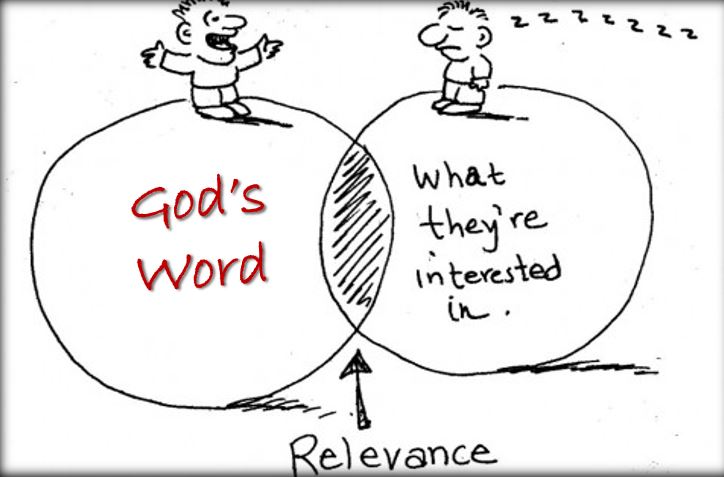
What’s missing between what God’s Word says and what people are interested in?


People don’t see it as relevant. Why might this be? 


Relevant: closely connected or appropriate to the matter at hand. (pertinent, applicable, material) Remember the quote from the video? “If it doesn’t fit my lifestyle, if it isn’t practical on a day to day basis for me, then I don’t consider it worth the investment.” To consider God’s Word not worth the investment is the same as saying that God Himself is not worth the investment.


I’m reading a book that Charlie & Joy Saylor have given me: The Power of an Eternal Perspective.

  • The book says that all Christians must make a paradigm choice: the decision between what is and what seems to be, what will last and what won’t – between the eternal and the temporal. The choice we make is between that which God says will endure and that which won’t. Followers of Jesus will naturally want to be a people who treasure what God says is a lasting treasure. To value what God values, we have to shift from allowing other people and the world around us (Trends & Friends) to shape how we see things to allowing what the Bible (God’s Word) says to shape our view of life. We are constantly under pressure to cave in to viewing things like everyone around us does.
  • Paradigm: a typical example or pattern of something; a model.


Today, Psalm 119 says that God’s Word reflects His character and power – and always will.


We will look at three truths and points that the psalmist makes about the Bible.


I. God’s Word is Timeless Psalm 119:89-91

89 Lord, Your word is forever; it is firmly fixed in heaven. 90 Your faithfulness is for all generations; You established the earth, and it stands firm. 91 They stand today in accordance with Your judgments, for all things are Your servants.


While trends come, and go, God’s Word is established in heaven. The psalmist thanked God for His unchanging nature. To say of God that His Word is settled in the heavens reassures the psalmist that no matter what adversary or opposition may come, God’s established order cannot be shaken. With the uncertainties of this world, it is good to know that our God remains certain. He can be counted upon as faithful both today and tomorrow. 


Only two things will last beyond this world: The Word of God and the souls of people. To spend eternity in heaven, we must commit our souls to God and His eternal Word.


I want you to think for a moment about this first question: When did you first encounter the Bible in a meaningful way? What made that encounter meaningful to you?

  • REFERENCE POINT - STAKING OUR LIVES ON THE WORD OF GOD: Can you imagine living alone in darkness for six months? During his first Antarctic expedition, Admiral Byrd flew to the South Pole all by himself. He built a small hut to shelter himself from the brutal six-month-long winter night. Blasts of arctic wind and biting, blowing snow buried his small hut every night. Each day, Admiral Byrd shoveled his way to the surface of the snow. When he broke through, the light was so dim he could see only a dozen yards. If he left his hut, he used the stovepipe sticking out of the snow as a reference point to find his way back. One day when he turned to go back, he could not see the stovepipe! Although panic threatened to overwhelm him, he refused to move. He knew the danger. If he wandered about looking for his hut, he would probably get further and further away. Instead, he drove a stake into the snow. Using it as a center, he paced around a large circle looking for the entrance to his hut. He kept one eye on the stake and searched through the darkness with the other. Not finding the hut, he extended his radius and made a bigger circle. The third time he tried, his circle was so large, he almost lost sight of his stake. He returned and resolved to make one more attempt with an even larger circle. As he made that fourth round, he strained his eyes to their limit to peer through the darkness. He knew if he lost sight of the stake—his reference point—he would quickly succumb to the ice and snow. But the fourth time, he walked right into the hut’s tunnel.
  • Do you ever feel like you are wandering through darkness in your life? All of us feel that way at times. Circumstances can overwhelm us. Ailing parents, loss of a job, high mortgages, too many bills, family crises, sickness, and other problems can make us wonder how we will ever find our way. The world tells us that we have no reference point to help us solve our difficulties. Definite standards and rules are obsolete and intolerable. The future is unknowable and unchangeable, so we should live it up now. But as Christians, we do have a reference point—the Bible. When we stake our lives on its teachings and principles, God gives us guidance on how to live. When we love, trust, and obey Him and His Word, we will enjoy the abundant life He has promised every believer.
  • When I realized how relevant God’s Word is to my daily life. Daily morning devotions.
  • The Bible is not a history book, a psychology text, or a scientific journal. The Bible is the description God gave us about who He is, and His desires and plans for humanity. The most significant revelation is our separation from God by sin and God’s provision for restoration through the sacrifice of His Son, Jesus Christ, on the cross. Our need for redemption does not change. Neither does God’s desire to reconcile us to Himself. The Bible contains a great deal of accurate and relevant information. The Bible’s most important message—redemption—is universally and perpetually applicable to humanity. God’s Word will never be outdated, superseded, or improved upon. Cultures change, laws change, generations come and go, but the Word of God is as relevant today as it was when it was first written. 

Our lesson says, the Bible isn’t the book of the week, or even the book of the year. It’s the book of the ages! As the prophet, Isaiah declared, “The grass withers, the flowers fade, but the word of our God remains forever” (Isa. 40:8).


The words firmly fixed (v. 89), established (v. 90), and stands firm (v. 90) are key words in these verses. 


Why is it important to know that God’s Word will never change? 

  • The psalmist affirmed the “forever” nature of God’s Word by proclaiming it to be “firmly fixed.” When pillars are set during a construction project, they are put there to stay. If the pillars are moved, the building will collapse. The Word of God is the pillar that upholds our lives. It is perfectly grounded and stands firm. In addition, the psalmist noted that God’s Word is “firmly fixed in heaven.” The Bible is transcendent; it’s above and beyond us. It’s outside the reach of human opposition on earth and spiritual opposition in the heavenly places.

Point: The Bible is eternal. It remains true in every generation. 

While trends come, and go, God’s Word is established in heaven. The psalmist thanked God for His unchanging nature. To say of God that His Word is settled in the heavens reassures the psalmist that no matter what adversary or opposition may come, God’s established order cannot be shaken. With the uncertainties of this world, it is good to know that our God remains certain. He can be counted upon as faithful both today and tomorrow.


The book I’m reading says that people seem more apt to hope for eternity when life is very tough. Why might this be?

  • Many of us living on earth now are among the most affluent and comfortable people who have ever lived here. We have more pleasures than kings once knew. We control our climate with a thermostat. We can go wherever we choose by various modes of transportation. We can command all the great orchestras of the world to play whatever we want at any given moment on phones that fit in our pockets!
  • These blessings can bring with them an unfortunate consequence: life in the temporal here and now can feel so comfortable that we really can come to prefer it over any hope of a promised eternal home. This would be a terrible mistake – because we are living an illusion instead of the truth. 
  • This is why moments of brokenness are a gift. They rescue us from complacency and build our longing for what is better.


II. God’s Word is Life-Giving Psalm 119:92-93

92 If Your instruction had not been my delight, I would have died in my affliction. 93 I will never forget Your precepts, for You have given me life through them. 


The Psalmist moves in the previous verses from speaking of the forever (v. 89) to speaking of the today (v. 91). And in verses 92 and 93, he reminds us that God’s timeless Word is also God’s Life-Giving Word for the following reasons: But what does the psalmist mean?

A. It gives delight (v. 92). What do you think he means when he says, “If Your instruction had not been my delight, I would have died in my affliction.”? God’s Word gives us joy when we live according to His instruction - we find strength and help for our walk, even in the midst of afflictions. God’s Word delights for it teaches us how to live. God’s Word speaks direction to our steps. 


B. It gives life (v. 93). What do you think he means when he says that God had given him life through the Word? God’s Word gives us the source and secret of life. It revives the brokenhearted and downtrodden. It restores the fallen. It breathes a fresh beginning for each day. God Word created life and it recreates life in those who receive it. When God infuses His Word into our life, refreshment and rejuvenation come into our being.


How have you experienced ‘life’ as a result of God’s instruction? 

  • The psalmist clung to God’s Word.
  • Because God’s Word was his delight, his primary focus in life, it brought him life in the midst of the persecution he was enduring.

Point: Obeying God’s Word gives joy and direction in difficult times. 

In the midst of our ever-changing world, God’s Word sustains us through every challenge. Our spirit is truly willing, but our flesh is weak. The psalmist had experienced the life-giving power of God’s Word and it had sustained him in the depths of his affliction. Therefore, he boasted in God’s Word and pledged to persevere in remembering and obeying it. Paul wrote that we should actually boast in our weaknesses in order that God’s power may rest upon us. God’s Word is sufficient for whatever we face. It does not keep us from affliction, but it allows us to overcome it. With it, we might find joy and fulfillment in this life, but without it, we face nothing but despair and bitter disappointment.

The psalmist said: I will never forget Your precepts, for You have given me life through them.  

The concept of remembering! What is important about this?

  • This concept is important to God, it’s emphasized throughout the Bible.
  • Remembering was a central focus for God’s people in biblical times and today.
  • This means much more than just recalling an event. Just as “hearing God” means “obeying God,” in a similar way remembering involves a change in living based on what God has done in the past for us.


III. God’s Word is Perfect Psalm 119:94-96

94 I am Yours; save me, for I have sought Your precepts. 95 The wicked hope to destroy me, but I contemplate Your decrees. 96 I have seen a limit to all perfection, but Your command is without limit. 


Obviously, the psalmist is going through and has gone through some sort of persecution here because he asks to be saved. On what basis, does he ask to be saved?

  • I am Yours – and our lesson says that God will always take care of those who belong to Him. The psalmist knew this.
  • For I have sought Your precepts – this is important to remember, because God’s help isn’t contingent on our perfection, if it were we would be doomed. But God’s Word is perfect and we are expected to engage His Word, or as the psalmist put it, “I have sought Your precepts.”


It’s important to remember, that walking with God doesn’t immune us from trouble. The psalmist certainly knew and experienced this: “The wicked hope to destroy me, but I contemplate Your decrees.’ We will face opposition.” 

When the wicked threatened, the psalmist turned to God’s Word for aid. He sought the solution from God, not himself. [Verse 96] could be an excellent summary of the Book of Ecclesiastes. Solomon, the author of Ecclesiastes (called “the Preacher” or “the Teacher”) examined all of life’s activities without God and declared them to be futile. Yet when life is lived to the fullest—that is, in relationship with God—it can be perfect (in the sense of being complete or fulfilling). The psalmist’s phrase all perfection likely refers to all of life’s activities without God, in that it has a limit (the human concept of perfection that excludes God, His laws, His ways, and so forth). The psalmist contrasted God’s command—it is without limit—with the activities of people apart from God, which are limited. In other words, the psalmist stated that God’s Word is eternal. 


Jesus’ warned about the need to invest our lives in that which has eternal value (see Matt. 6:19-21). The psalmist knew that true satisfaction and fulfillment in life flow out of a relationship with God and a life lived in obedience to His Word. When we come into a relationship with God through Jesus Christ, we begin living life as God meant for us to live it. As Jesus, Himself proclaimed, “I have come so that they may have life and have it in abundance” (John 10:10).


Our lesson asked us this week, how can we be sure that our study and seeking of God’s Word actually leads us closer to God? What do you think? Are there any specific steps we can take to allow God’s Word to deepen our connection with God Himself?


How can we ensure that engaging God’s Word leads us to grow closer to Him? What specific steps can you take to allow God’s Word to deepen your connection with God Himself? 


1. Conviction - Conviction is feeling the drawing of God’s presence in your life to surrender to Him in a particular way. Conviction is also the sorrow we feel when we fail to surrender to God. Conviction is a beautiful gift from God that draws on our emotions for the sole purpose of bringing us back to where we belong: in the presence of God. In short, when you feel that faint drawing on your heart to get right with God, to admit your sin, to say you’re sorry, to seek Him more, that’s conviction. Listen to Him. Immediately. You’ll find His life there.


2. Repentance - Repentance is getting raw honest with God. Talking to Him about what we’re feeling. Hiding nothing. Withholding nothing. Throwing our guts up before God and getting the whole rotten mess out before Him. Repentance is how God cleanses the deepest places of our soul. It’s also how He ushers forth the power of His Holy Spirit to transform our lowly selves into the likeness of His Son, Jesus Christ. Bypassing a lifestyle of true repentance before God will quench the Holy Spirit’s available power from manifesting itself in our daily lives. If we want to stay aware and sensitive to God each day, living a lifestyle of repentance before Him is vital. Repentance is taking full responsibility for every thought, action, word, misdeed, and all areas of pride, self-reliance, ways we’ve not heeded God’s conviction, or lack obeying Christ. In short, repentance is buckling our knees to the authority and character of God. The moment we feel guilty. The second we sense the Spirit’s “no-no” in our hearts. Instead of waiting until we “feel like it,” we don’t allow ourselves the room. Living a lifestyle of repentance is walking in step with the holiness of God today—right now. Repentance releases the pent-up dam for a fresh release of the presence of God. It restores the joy of our salvation, and the oneness we delight in with His Spirit, and hunger to have more of, with God. Repentance secures our safety, restores our vision, and opens the lines of communication and intimacy between God and us. 


3. Teachability - Having a teachable heart is also vital for knowing God more, for keeping what we’ve already attained in Him, and for actively engaging with God from day to day—even being used by Him. Having a teachable disposition before God not only blesses Him, it allows Him to use us in greater measures. Why is this so? Because the one who has a teachable heart is yielding to His conviction by surrendering themselves fully; plus, they are showing signs of great humility and obviously yielding in repentance before Him too. Those who are teachable get to enjoy the secret things of God because they’ve proven themselves trustworthy enough to share His heart with. When we walk with God, His ways are not like our ways. We must yield to His leadership, His way of doing things, Him calling the shots and us simply following. But oh, when we follow. This is where the “more” is found. Having a teachable heart is looking to God as our source of life, not comparing ourselves with others to the right or to the left. Seeing what they’re learning, doing, or not doing. Our eyes are on the Great Teacher, not pinging here and there and everywhere, giving us a serious case of spiritual A.D.D. Having a teachable heart is a willingness to listen to our Instructor and to do what He says—and the sooner the better for God to receive highest worship and our greatest joy.


4. Intercession - Intercession is living in a place of open dialogue with God for you and for others. Where conviction draws us to God, intercession keeps us before God. It positions Him in the most prominent place for everything pertaining to life, to godliness, to His will and work in our lives, as well as His will and work in others. If a crisis comes up and we turn to God in prayers, calling on Him to act, throwing the situation and circumstances before Him, that’s intercession. Intercession is more than the simple act of praying but it’s throwing all things before Him and calling on Him to move, to act, to intervene, and to respond. Intercession is not about having polished and primped prayers for others to be impressed by. Intercession is living a humble life before God, welcoming Him into every area of our lives and the lives we are bringing before Him, and keeping our ear to His chest to hear His heartbeat. Intercession is not just praying; it’s listening for His plans, purposes, and areas where He is inviting us to join Him in the work He has in mind and desires to do. In short, intercession is leaving the shallow shores of “God bless our food, our lives, and our dog,” for the much rougher waters where God is teaching us “to will and to work for His great pleasure” (Philippians 2:13 ESV). Even the deeper waters of praying for ourselves: “God, if You do not keep my head above water, I won’t make it.” Or the deep waters of praying for our families: “God, if You do not keep all of us treading these dangerous waters, we’re all sure to die. You alone are our only Help, our greatest victory, and our ultimate joy. In Jesus’ mighty, saving, powerful name.”


Point: When we are in a right relationship with God, we can count on Him to deliver us. 


In closing, the psalmist writes of seeing the end of all things and finding no perfection. Even the best of human desires, designs, and dreams fall short of finding complete fulfillment. Our world is limited, tainted, and finite. Therefore, nothing can be perfect. As we grow older, we tend to accept this as a fact. Some use it to excuse their lack of desire or motivation to change. However, God’s commands are limitless, pure, and eternal.


Man’s ways are bound, but God’s precepts are boundless. Man’s ways are finite and limited, but God’s testimonies are eternal and unlimited. Therefore, wherever God guides, His Word provides. Whatever the need, God’s Word is sufficient. Whatever the question, God’s Word provides the answer. Whatever the struggle, God’s Word brings peace.


God’s Word can be trusted. No matter the culture, the time period, or the circumstance, God’s Word can deliver because it’s power is derived from the source and the source is God Himself. Therefore, we should look to it for any and every decision we face and then abide by its every principle.


The Bible is an ancient book – actually a collection of ancient books – written by men who were moved by the Spirit of God. In that sense, God is the true Author of Scripture. Therefore, though ancient in time, the Bible is relevant because God Himself is relevant. 


Reasons why God’s Word continues to be relevant for our day.


1. God is still God

2. Sin is still sin

3. Man still needs redemption.

4. The missionary commission still stands.

5. Our inner needs are ever the same.

6. It gives hope in the present.

7. It tells of the final victory of Christ.


God’s Word


Just use me – I am the Bible.

I am God’s wonderful library.

I am always – and above all – the Truth.

To the weary pilgrim, I am a good strong staff.

To the one who sits in gloom, I am a glorious light.

To those who stoop beneath heavy burdens, I am sweet rest.

To him who has lost his way, I am a safe guide.

To those who have been hurt by sin, I am a healing balm.

To the discouraged, I whisper glad messages of hope.

To those who are distressed by the storms of life, I am an anchor.

To those who suffer in lonely solitude, I am a cool, soft hand resting on a fevered brow.

O, child of man, to best defend me, just use me!


Wrap It Up 

There have been times in history when the Bible was a social expectation— even fashionable. But while societies change, God’s Word will always remain the same. 


Hope to see you on Sunday! 


In His Love, 

David & Susan