


THE BIBLE MEETS LIFE

Yet,
as tragic as that is, China is still on pace to have the world’s largest
Christian population by 2030. 2 In spite of all the government’s efforts to
suppress biblical beliefs and persecute believers, more Christians than
communists now live in China. 3 We might be surprised by the growth of
Christianity in a deeply irreligious country, but God has a way of making
Himself known. I heard one missionary in China say, “God will always reveal Himself
to anyone who is seeking Him, and that has been my experience in China.”
Many
of us learned about God at home; our families talked openly about God. Or they
took us to church. For others, we had a friend who pointed us to Christ. But
even for those who haven’t had such experiences, they still can have an
awareness and knowledge of God. The Book of Psalms shows us the ways God has
revealed Himself to us.


WHAT DOES THE BIBLE SAY?
Psalm 19:1-6
1 The heavens declare
the glory of God, and the expanse proclaims the work of his hands. 2 Day after day they
pour out speech; night after night they communicate knowledge. 3 There is no speech;
there are no words; their voice is not heard. 4 Their message[b] has
gone out to the whole earth, and their words to the ends of the world. In the
heavens he has pitched a tent for the sun. 5 It is like a
bridegroom coming from his home; it rejoices like an athlete running a course. 6 It rises from one end
of the heavens and circles to their other end; nothing is hidden from its heat.
What
makes the Judeo-Christian worldview unique among its rivals is our worship of
the Creator; other belief systems worship aspects of the creation: the sun,
moon, stars, nature, and animals. The Old Testament law condemned anyone who
had “gone and served other gods, and worshipped them, either the sun, or moon,
or any of the host of heaven, which I have not commanded” (Deut 17:3). Such idolatry
is tragic because the created universe points us to God’s presence and power.
In
this psalm, David worshiped God for revealing His existence in the created,
observable world. “The heavens declare the glory of God; and the firmament
sheweth his handywork.”
God’s declaration is not periodic or occasional; it continues non-stop. David said, “Day unto day uttereth speech.” It’s like coming late to a worship service: you enter the room and hear worship already in progress.
God’s declaration is not periodic or occasional; it continues non-stop. David said, “Day unto day uttereth speech.” It’s like coming late to a worship service: you enter the room and hear worship already in progress.
Nor
is the declaration of God’s presence and glory limited to one corner of His
universe. “Their line is gone out through all the earth, and their words to the
end of the world.” The prophet Isaiah expressed the same thing in his vision,
as he heard the Seraphim proclaiming, “Holy, holy, holy, is the Lord of hosts:
the whole earth is full of his glory” (Isa. 6:3). David continually saw the
worship of God in the world around him: “O Lord our Lord, how excellent is thy
name in all the earth! who hast set thy glory above the heavens” (Ps. 8:1).

God has never been hidden. God’s general or natural revelation; that is, the unveiling of Himself, has been communicated since the very beginning of creation. David’s use of the word declare is from the Hebrew word rendered to count or make a written record. The universe is a record we read that proclaims God’s existence, His power, and His glory. Centuries later, Paul stood on the shoulders of David and declared, “For the invisible things of him from the creation of the world are clearly seen, being understood by the things that are made, even his eternal power and Godhead; so that they are without excuse” (Rom 1:20).

God has never been hidden. God’s general or natural revelation; that is, the unveiling of Himself, has been communicated since the very beginning of creation. David’s use of the word declare is from the Hebrew word rendered to count or make a written record. The universe is a record we read that proclaims God’s existence, His power, and His glory. Centuries later, Paul stood on the shoulders of David and declared, “For the invisible things of him from the creation of the world are clearly seen, being understood by the things that are made, even his eternal power and Godhead; so that they are without excuse” (Rom 1:20).
Let’s
look at just one example: the sun. What is it about a sunrise that captures our
attention? At a time when our daughter was struggling with fear—a fear that
made it difficult for her to sleep—we were on a weekend trip to Galveston. My
wife, Audrey, took our daughter to the beach for devotions at dawn. As they
observed the glorious sunrise, Audrey walked her through the truths that God is
always with her and she has nothing to fear. The sunrise is a reminder of God’s
presence. Our daughter was able to leave her fear on the beach, and she
returned home assured of God’s abiding presence in her life.
The
sun holds a central role as evidence for the creative power of God. In
describing the sun, David used two emotive word pictures.
The
sun is like a husband rushing out of his bedroom after his wedding night and
like a powerful runner crossing the finish line at the end of a race. These are
pictures of joy and purpose. And because the sun is such a prominent feature of
the creation we see, it is a bold declaration of God. We cannot hide from the
sun’s heat, and we cannot hide from its message about God.
Creation’s
message is limited, though. We call the message the universe reveals about God
“general revelation.” General revelation points us to our Creator, but only
Jesus Christ and His special, written revelation in the Bible gives us a fuller
understanding of the nature and character of that Creator. General revelation should
be seen as a gateway—only the beginning. As the psalmist said, “The works of
the Lord are great, sought out of all them that have pleasure therein” (Ps.
111:2). That means God’s creation draws us in to seek Him more, and that brings
us to Scripture, His revealed Word.
Psalm
111:7-9
7 The
works of his hands are truth and justice; all his instructions are
trustworthy. 8
They are established forever and ever, enacted in truth and in uprightness. 9 He
has sent redemption to his people. He has ordained his covenant forever. His
name is holy and awe-inspiring.

The
psalmist originally wrote Psalm 111 to be sung in worship to God. In its
original Hebrew form it is an alphabetical acrostic: it contains twenty-two
lines, and each line begins with the next successive Hebrew letter. With its
focus on God’s works, it’s like saying, from A to Z, all God’s works call for
praise.
In
verses 7-9, the psalmist zeroed in on the works of God as seen in His truth,
justice, instruction, and redemption. We know of these things because He has
revealed them through Scripture, the divinely inspired Word of God. And that
Word is trustworthy! The psalmist’s statement — “all his commandments are sure”
— is a confession of trust and respect for God’s Word and its application to
his life.
This
passage reflects a divine agreement. The psalmist acknowledged both the
covenant and the redemption established by God, but it was more than a mental
acknowledgement. The psalmist wrote with absolute faith in the works and words
of God. We
also live in divine agreement when we are one with God on the same issue. We
choose to see things from God’s perspective. We can entrust the difficult
decisions in our lives to God because His Word — His instructions to us — are
trustworthy.
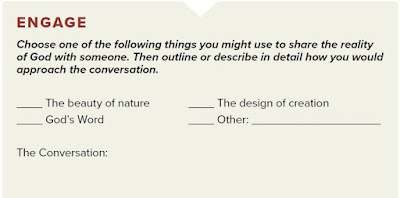


The Word of God stands forever, and it empowers my walk with Christ. Therefore, it is not enough to know the Bible intellectually; in fact, we don’t really know the Bible until we encounter it experientially. We truly learn God’s truth as we apply it to our lives.
To
that end, adopt one of these principles:
The
K-D Principle: Know what the Word says, then Do what the Word says.
The
M-A Principle: Discover the Meaning of the Scripture, then Apply that meaning to your
life. Only when you understand the meaning of Scripture do you have the confidence
to apply that meaning to your life.
It is
not enough to know about God’s redemption; we must experience it for ourselves!
God’s Word is clear: we can never come into a right relationship with God on
our own (Rom. 3:10-12).
Thankfully,
God has “sent redemption unto his people” through Jesus Christ. The
Scripture—God’s trustworthy instruction—points us to Jesus, our Redeemer. Only
God can redeem us; He has paid the price to set us free.
It
gets even better! The redemption God lavished on His people cannot fail; it is
confirmed by His covenant—a covenant “he hath commanded … forever.” Moses
connected this covenant with God’s love, or more specifically, His “covenant
and mercy” (Deut. 7:9). God’s love is faithful, even when we are unfaithful, because
His covenant of love cannot fail. He brings us into His family in a covenant to
protect, provide, and commune with us. This covenant is not based on our
performance but on His redemption accomplished in Jesus Christ.

Psalm
111:10
10
The fear of the Lord is the beginning of wisdom; all who follow his
instructions have good insight. His praise endures forever.
The
Hebrew word for fear in this passage is yirah; it means reverence and profound respect
motivated by love. When we consider the extreme power and greatness of God and
couple that with His unfailing love for us, we’re moved to this type of fear.
David showed us how to fear the Lord: “But as for me, I will come into thy
house in the multitude of thy mercy: and in thy fear will I worship toward thy
holy temple” (Ps. 5:7). I express this fear by beginning each day with these words,
“God, what do you have for me today?” I am sensitive to His leadership in my
life because I stand in worshipful awe of His plan and goodness in my life.
Living
before our loving God with fear puts us on the path to wisdom. Ultimately, the
greatest Source of wisdom is in Christ, who is Himself the truth (John 14:6).
When I fear God, I see His plan for my life—and I see it is better than my
plan! His plan includes living under the lordship of Christ, so I entrust my
life to Him.


Doubting
the wisdom of God is a clear picture of what happens when we don’t fear the
Lord. We pivot to wisdom or wickedness according to our fear of God. Just as
“the fear of the Lord is the beginning of wisdom,” so also a lack of godly fear
is the beginning of wickedness. “The fool hath said in his heart, There is no
God” (Ps. 14:1). In his indictment against sinful humanity, Paul quoted Psalm
36:1: “There is no fear of God before their eyes” (Rom. 3:18).
Three
men in Scripture found the wisdom that comes from fearing the Lord:
Job. Before Job was restored
by God, he expressed his reverential truth in the Lord. “The fear of the Lord,
that is wisdom: and to depart from evil is understanding” (Job 28:28).
David. David saw the
restorative power of fearing the Lord. “The fear of the Lord is clean, enduring
forever” (Ps. 19:9).
Solomon. Solomon, the Bible’s
wisest man and author of the Book of Proverbs made some foolish mistakes, which
he chronicled in the Book of Ecclesiastes. At last he arrived at this
conclusion: “Let us hear the conclusion of the whole matter: Fear God, and keep
his commandments: for this is the whole duty of man” (Eccl. 12:13).
God-fearing
wisdom shows us that right living is defined by a right relationship with God
through Jesus Christ. We not only can know God exists, but we can know God,
walk with Him, and live our lives grounded in His wisdom.


LIVE
IT OUT
Helen
Keller famously said to Phillips Brooks about God, “I always knew He was there,
but I didn’t know His name.” 5 God is in all places at all times, and He has
revealed Himself through creation—but most importantly, in His Word.
How
will you acknowledge the existence and presence of God?
Take
a walk. Get
outside and observe nature around you. Gaze up at the night sky. Consider how all
that you see points to God. Give God the glory for His creation.
Read
the Word.
Commit to regular reading of God’s Word. As you read and learn more about God
and His ways, commit to live out the truths you discover.
Have
a conversation. Discuss with someone why you are convinced God exists.
Explain what He has revealed to you through the created order and through His
Word.

Hope to see everyone this Sunday!
In His Love,
David & Susan
Teacher Notes:

Hope to see everyone this Sunday!
In His Love,
David & Susan
Teacher Notes:

Click Here to Watch
Video: For the Glory of God in Creation
God
created all things, including the heavens and the earth. A brief study of space
reveals God’s creative mastery:
- Is there noise in space?
SPACE IS COMPLETELY SILENT - There is no atmosphere in space, which means that
sound has no medium or way to travel to be heard. Astronauts use radios to stay
in communication while in space, since radio waves can still be sent and
received.
- The hottest planet in our solar system is 450° C – which planet is it? - Venus
is the hottest planet in the solar system and has an average surface
temperature of around 450° C. Interestingly, Venus is not the closest planet to
the Sun – Mercury is closer but because Mercury has no atmosphere to regulate
temperature it has a very large temperature fluctuation.
- Could there be life on another planet? THERE MAY BE LIFE ON MARS - Of all
the planets in our solar system (apart from Earth), Mars is the one most likely
to be hospitable to life. In 1986, NASA found what they thought may be fossils
of microscopic living things in a rock recovered from Mars.
- How many stars are in space? NOBODY KNOWS - The sheer size of space makes
it impossible to accurately predict just how many stars we have. Right now,
scientists and astronomers use the number of stars only within our galaxy, The
Milky Way, to estimate. That number is between 200-400 billion stars and there
are estimated to be billions of galaxies so the stars in space really are
completely uncountable.
- When will Halley’s comet orbit past the earth again? Not until 2061 - Discovered
in 1705 by Edmond Halley, the famous comet was last seen in 1986 and is only
seen once every 75 to 76 years.
- How much does a full NASA space suit cost? $12,000,000 - 70% of that cost
is for the backpack and control module.
- Is there a planet made out of diamonds? Maybe - As space facts go, this is
pretty impressive. Research by Yale University scientists suggests that a rocky
planet called 55 Cancri e — which has a radius twice Earth’s, and a mass eight
times greater – may have a surface made up of graphite and diamond. It’s 40
light years away but visible to the naked eye in the constellation of Cancer
and still considered “a girl’s best friend.”
- How long will the footprints on the moon be there? FOR 100 MILLION YEARS -
The Moon has no atmosphere, which means there is no wind to erode the surface
and no water to wash the footprints away. This means the footprints of the
Apollo astronauts, along with spacecraft prints, rover-prints and discarded
material, will be there for millions of years.
- What happens if two pieces of the same type of metal touch in space? THEY
WILL PERMANENTLY BOND - This incredible fact is also known as cold welding and
it happens because the atoms of two pieces of metal have no way of knowing they
are separate. This doesn’t happen on Earth because of the air and water found
between the pieces.
- Is there water in space?
THERE IS FLOATING WATER IN SPACE - Astronomers have found a massive water vapor
cloud which holds 140 trillion times the mass of water in the Earth’s oceans
somewhere around 10 billion light years away – making it the largest discovery
of water ever found.
Physicist – Stephen Hawkins: There
is no God
Click Here to Watch
Why do
you believe there is a God?
THE POINT: God has given us ways to
know He exists.
Psalm 19:1-6
1 The heavens declare
the glory of God, and the expanse proclaims the work of his hands. 2 Day after
day they pour out speech; night after night they communicate knowledge. 3 There
is no speech; there are no words; their voice is not heard. 4 Their message has
gone out to the whole earth, and their words to the ends of the world. In the
heavens he has pitched a tent for the sun. 5 It is like a bridegroom coming
from his home; it rejoices like an athlete running a course. 6 It rises from
one end of the heavens and circles to their other end; nothing is hidden from
its heat.
In
this psalm, David worshiped God for revealing His existence in the created,
observable world. He says we are surrounded by fantastic displays of God’s craftsmanship – the heavens give dramatic evidence of His existence, His power,
His love, and His care.
I. Nature points to God. It’s called and
considered God’s General or Natural Revelation.
How do you see nature declare the existence of God?
A. The complexity of our planet
points to a deliberate Designer who not only created our universe, but sustains
it today.
Many examples showing
God's design could be given, possibly with no end. But here are a few:
The Earth...its size is perfect. The Earth's size and
corresponding gravity holds a thin layer of mostly nitrogen and oxygen gases,
only extending about 50 miles above the Earth's surface. If Earth were smaller,
an atmosphere would be impossible, like the planet Mercury. If Earth were
larger, its atmosphere would contain free hydrogen, like Jupiter. Earth is the
only known planet equipped with an atmosphere of the right mixture of gases to
sustain plant, animal and human life. The Earth is located the right
distance from the sun. Consider the temperature swings we encounter,
roughly -30 degrees to +120 degrees. If the Earth were any further away
from the sun, we would all freeze. Any closer and we would burn
up. Even a fractional variance in the Earth's position to the sun would
make life on Earth impossible. The Earth remains this perfect distance from the
sun while it rotates around the sun at a speed of nearly 67,000 mph. It is also
rotating on its axis, allowing the entire surface of the Earth to be properly
warmed and cooled every day. Our moon is the perfect size and distance
from the Earth for its gravitational pull. The moon creates important ocean
tides and movement so ocean waters do not stagnate, and yet our massive
oceans are restrained from spilling over across the continents. Water itself...colorless,
odorless and without taste, and yet no living thing can survive without it.
Plants, animals and human beings consist mostly of water (about two-thirds of
the human body is water). You'll see why the characteristics of water are
uniquely suited to life: It has wide margin between its boiling point and
freezing point. Water allows us to live in an environment of fluctuating
temperature changes, while keeping our bodies a steady 98.6 degrees. Water is a
universal solvent. This property of water means that various chemicals,
minerals and nutrients can be carried throughout our bodies and into the
smallest blood vessels. Water is also chemically neutral. Without affecting the
makeup of the substances, it carries, water enables food, medicines and
minerals to be absorbed and used by the body. Water has a unique surface
tension. Water in plants can therefore flow upward against gravity, bringing
life-giving water and nutrients to the top of even the tallest trees. Water
freezes from the top down and floats, so fish can live in the winter.
Ninety-seven percent of the Earth's water is in the oceans. But on our Earth,
there is a system designed which removes salt from the water and then
distributes that water throughout the globe. Evaporation takes the ocean
waters, leaving the salt, and forms clouds which are easily moved by the wind
to disperse water over the land, for vegetation, animals and people. It is a
system of purification and supply that sustains life on this planet, a system
of recycled and reused water.
The human brain...simultaneously processes an amazing amount of
information. Your brain takes in all the colors and objects you see, the
temperature around you, the pressure of your feet against the floor, the sounds
around you, the dryness of your mouth, even the texture of your keyboard. Your
brain holds and processes all your emotions, thoughts and memories. At the same
time your brain keeps track of the ongoing functions of your body like your
breathing pattern, eyelid movement, hunger and movement of the muscles in your
hands. The human brain processes more than a million messages a second. Your
brain weighs the importance of all this data, filtering out the relatively
unimportant. This screening function is what allows you to focus and operate
effectively in your world. The brain functions differently than other organs.
There is an intelligence to it, the ability to reason, to produce feelings, to
dream and plan, to take action, and relate to other people. Then there’s the
eye...it can distinguish among seven million colors. It has automatic
focusing and handles an astounding 1.5 million messages -- simultaneously.
Evolution focuses on mutations and changes from and within existing organisms.
Yet evolution alone does not fully explain the initial source of the eye or the
brain -- the start of living organisms from nonliving matter.
B. The universe had a start - what caused it?
Did God start the universe - Scientists are convinced that our universe
began with one enormous explosion of energy and light, which we now call the
Big Bang. This was the singular start to everything that exists: the beginning
of the universe, the start of space, and even the initial start of time itself.
Astrophysicist Robert Jastrow, a self-described agnostic, stated, "The
seed of everything that has happened in the Universe was planted in that first
instant; every star, every planet and every living creature in the Universe
came into being as a result of events that were set in motion in the moment of
the cosmic explosion...The Universe flashed into being, and we cannot find out
what caused that to happen." Steven Weinberg, a Nobel laureate in Physics,
said at the moment of this explosion, "the universe was about a hundred
thousand million degrees Centigrade...and the universe was filled with
light." The universe has not always existed. It had a start...what caused
that? Scientists have no explanation for the sudden explosion of light and
matter.
C. The universe operates by uniform laws of nature. Why
does it?
Much of life may seem uncertain, but look at what we can count on day
after day: gravity remains consistent, a hot cup of coffee left on a counter
will get cold, the earth rotates in the same 24 hours, and the speed of light
doesn't change -- on earth or in galaxies far from us. How is it that we can
identify laws of nature that never change? Why is the universe so orderly, so
reliable? "The greatest scientists have been struck by how strange this
is. There is no logical necessity for a universe that obeys rules, let alone one
that abides by the rules of mathematics. This astonishment springs from the
recognition that the universe doesn't have to behave this way. It is easy to
imagine a universe in which conditions change unpredictably from instant to
instant, or even a universe in which things pop in and out of existence."
Richard Feynman, a Nobel Prize winner for quantum electrodynamics, said,
"Why nature is mathematical is a mystery...The fact that there are rules
at all is a kind of miracle."
D. The DNA code informs and programs a cell's
behavior.
DNA is like a computer program. All instruction, all teaching, all
training comes with intent. Someone who writes an instruction manual does so
with purpose. Did you know that in every cell of our bodies there exists a very
detailed instruction code, much like a miniature computer program? As you may
know, a computer program is made up of ones and zeros, like this: 110010101011000.
The way they are arranged tell the computer program what to do. The DNA code in
each of our cells is very similar. It's made up of four chemicals that
scientists abbreviate as A, T, G, and C. These are arranged in the human cell
like this: CGTGTGACTCGCTCCTGAT and so on. There are three billion of
these letters in every human cell!! Well, just like you can program your phone
to beep for specific reasons, DNA instructs the cell. DNA is a
three-billion-lettered program telling the cell to act in a certain way. It is
a full instruction manual. There are 3 billion chemicals of DNA within each
human cell. Why is this so amazing? How did this information program wind up in
each human cell? These are not just chemicals. These are chemicals that
instruct that code in a very detailed way exactly how the person's body should
develop. Natural, biological causes are completely lacking as an explanation
when programmed information is involved. You cannot find instruction, precise
information like this, without someone intentionally constructing it.
What are some lasting truths from Psalm 19:1-6?
- The Lord is to be praised as the
Creator of all that is.
- The Lord has revealed Himself through
His creation; its existence, order, and beauty.
- The skies and the heavenly bodies, like
the sun, declare the glory of God that no one can miss.
Psalm
111:7-9
7 The
works of his hands are truth and justice; all his instructions
are trustworthy. 8 They are established forever and ever, enacted in
truth and in uprightness. 9 He has sent redemption to his people. He has
ordained his covenant forever. His name is holy and awe-inspiring.
In
verses 7-9, the psalmist zeroed in on the works of God as seen in His truth,
justice, instruction, and redemption. We know of these things because He has
revealed them through Scripture, the divinely inspired Word of God. And
that Word is trustworthy!
II. Scripture reveals God.
How would you describe the value of the
Scriptures to you in knowing the Lord and in having insight for living a life
that pleases Him?
E. We know God exists because He pursues us. He is
constantly initiating and seeking for us to come to Him.
For many atheists, the issue of people believing in God is bothersome.
What is it about atheists that they would spend so much time, attention, and
energy refuting something that they don't even believe exists?! What causes them
to do that? An atheist will do all they can to help believers realize their
hope is completely ill-founded. But they have another motive to. They like to challenge
those who believed in God, curious to see if they could convince the atheist otherwise.
Part of their quest was to become free from the question of God. God seeks to know us – many atheists don’t realize that the reason the
topic of God weighed so heavily on their mind, was because God was pressing the
issue. They have come to find out that God wants to be known. He created us
with the intention that we would know Him. He has surrounded us with evidence
of Himself and He keeps the question of His existence squarely before us. It
might be that the underlying reason atheists are bothered by people believing
in God is because God is actively pursuing them. C.S. Lewis said he remembered,
"...night after night, feeling whenever my mind lifted even for a second
from my work, the steady, unrelenting approach of Him whom I so earnestly
desired not to meet. I gave in, and admitted that God was God, and knelt and
prayed: perhaps, that night, the most dejected and reluctant convert in all of
England." Lewis went on to write a book titled, "Surprised by
Joy" as a result of knowing God.
F. Unlike any other revelation of God, Jesus Christ
is the clearest, most specific picture of God revealing Himself to us.
Why Jesus? Look throughout the major world religions and you'll find that Buddha,
Muhammad, Confucius and Moses all identified themselves as teachers
or prophets. None of them ever claimed to be equal to God. Surprisingly,
Jesus did. That is what sets Jesus apart from all the others. He said God
exists and you're looking at Him. Though He talked about His Father in
heaven, it was not from the position of separation, but of very close union,
unique to all humankind. Jesus said that anyone who had seen Him had seen the
Father, anyone who believed in Him, believed in the Father. Jesus Christ
reveals God to us - He said, "I am the light of the world, he who
follows Me will not walk in darkness, but will have the light of life." He
claimed attributes belonging only to God: to be able to forgive people of
their sin, free them from habits of sin, give people a more abundant life and
give them eternal life in heaven. Unlike other teachers who focused people on
their words, Jesus pointed people to Himself. He did not say, "follow my
words and you will find truth." He said, "I am the way, the truth,
and the life, no one comes to the Father but through Me." What proof
did Jesus give for claiming to be divine? He did what people can't do.
Jesus performed miracles. He healed people...blind, crippled, deaf, even raised
a couple of people from the dead. He had power over objects...created food out
of thin air, enough to feed crowds of several thousand people. He performed
miracles over nature...walked on top of a lake, commanded a raging storm to
stop. People everywhere followed Jesus, because He constantly met their needs,
doing the miraculous. He said if you do not want to believe what I'm telling
you, you should at least believe in Me based on the miracles you're seeing.
Jesus Christ showed God to be gentle, loving, aware of our self-centeredness
and shortcomings, yet deeply wanting a relationship with us. Jesus revealed
that although He views us as sinners, worthy of His punishment, His love for us
ruled and He came up with a different plan. God himself took on the form of man
and accepted the punishment for our sin on our behalf. Sound ludicrous?
Perhaps, but many loving fathers would gladly trade places with their child in
a cancer ward if they could. The Bible says that the reason we would love God
is because He first loved us. Jesus died in our place so we could be forgiven.
Of all the religions known to humanity, only through Jesus will you see God
reaching toward humanity, providing a way for us to have a relationship with
Him. Jesus proves a divine heart of love, meeting our needs, drawing us to
Himself. Because of Jesus' death and resurrection, He offers us a new life
today. We can be forgiven, fully accepted by God and genuinely loved by God. He
says, "I have loved you with an everlasting love, therefore I have
continued my faithfulness to you." This is God, in action.
General
revelation points us to our Creator, but only Jesus Christ and His special,
written revelation in the Bible gives us a fuller understanding of the
nature and character of that Creator.
General
revelation should be seen as a gateway—only the beginning.
God
does not force us to believe in Him, though He could. Instead, He has provided
sufficient proof of His existence for us to willingly respond to Him.
- The earth's perfect distance from the sun,
- the unique chemical properties of water,
- the human brain, DNA,
- the number of people who attest to knowing God,
- the gnawing in our hearts and minds to determine if God is there,
- the willingness for God to be known through Jesus Christ.
LIVE
IT OUT
Helen
Keller famously said to Phillips Brooks about God, “I always knew He was there,
but I didn’t know His name.” 5 God is in all places at all times, and He has
revealed Himself through creation—but most importantly, in His Word.
Have
a conversation. Discuss with someone why you are convinced God exists.
Explain what He has revealed to you through the created order and through His
Word.
Why I Believe There is a
God


